
RECOS - REsilience of COworking Spaces
RECOS is a research project focused on understanding how coworking spaces (CWS) adapt to external challenges and changes in urban environments. While many studies explore CWS, there are still gaps in knowledge, especially in how their locations evolve over time and how they respond to shifting worker demands.The project is financed under HORIZON-MSCA-2023-PF-01-01 - MSCA Marie Skłodowska-Curie Postdoctoral Fellowships programe.
Aims
1. Develop a Resilience Assessment Framework – A tool to evaluate how well coworking spaces can withstand disruptions.
2. Analyze Location Trends – Mapping where coworking spaces are situated and identifying key factors influencing their locations.
3. Create a Smart Online Platform – A prototype that helps individuals and businesses optimize work locations using spatial data.
Why It Matters?
1. Helps hybrid workers make informed choices about where to work.
2. Supports urban planners in designing better workplace environments.
3. Boosts the profitability and sustainability of coworking spaces.


A Comparative Approach to Urban Resilience
RECOS takes a case study approach, analyzing coworking spaces in three distinct urban settings: Stockholm (compact city), Randstad Metropolis (polycentric region), and Warsaw (diffused urbanization). By studying these diverse city structures, the project will uncover how coworking spaces adapt to different urban forms.The research operates on two levels:
Metropolitan Scale – Examining broader location patterns of coworking spaces.
Intra-Urban Scale – Identifying key factors that influence their resilience.To get a complete picture, RECOS looks at both demand and supply—exploring the needs of users, the strategies of coworking space operators, and the role of urban design. This comparative approach will provide valuable insights into how coworking spaces thrive in different urban environments.
Impact on Society
By bridging gaps in urban design and coworking space resilience, RECOS contributes to smarter cities, sustainable work environments, and Europe’s knowledge-driven economy. It also provides valuable insights for policymakers on remote work, commuting, and urban resilience.
About Me
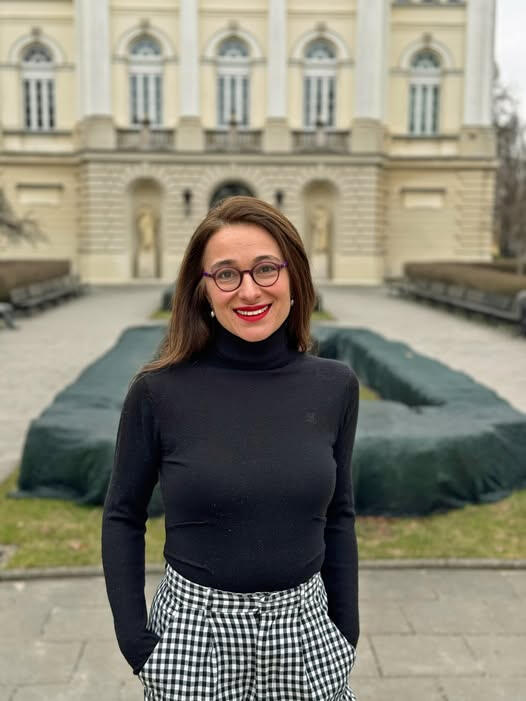
My name is Katarzyna Wojnar.I am a Marie-Curie Fellow Post-Doc at Faculty of Architecture and the Built Environment, Department of Management in the Built Environment, Delft University of Technology. I came to Delft from EUROREG - the Centre for European Regional and Local Studies at the University of Warsaw, Poland.My research focuses on urban and economic geography, with a particular interest in coworking spaces, creative industries, and regional development.With a PhD in economic geography and master's degrees in regional studies, social policy, and European political sociology, I have built an interdisciplinary expertise in urban dynamics, public policy, and economic transformation. Over the years, I have led and contributed to numerous national and international research projects, including those funded by the EU, ESPON, and Horizon Europe.My work explores the evolution of new working spaces, their spatial impacts, and the factors shaping their development. I have conducted extensive GIS and qualitative research, collaborated with leading institutions across Europe, and presented findings at major international conferences. Beyond academia, I have provided expert analyses for organizations such as the European Commission and the Polish government.I also worked as a vice-head of Urban Studies at the University of Warsaw and coordinated the UNICA & the City Working Group—a network of capital city universities. My book, Polish Creative Class, and my contributions to cultural and creative policy development in Warsaw reflect my commitment to bridging research with real-world impact.Driven by curiosity and a passion for cities, I strive to deepen our understanding of how urban spaces evolve in response to global challenges.
Contact
PhD Katarzyna Wojnar
Marie-Sklodowska-Curie Post-Doc FellowTU Delft | Delft University of Technology
Faculty of Architecture and the Built Environment
Department of Management in the Built EnvironmentJulianalaan 134 | 2628 BL Delft